
How to Reduce Appointment No-Shows: The 2026 Guide
TL;DR
To reduce no-shows, swap the passive reminder for active confirmation: a message that asks for a yes/no and reschedules in one tap. A yes commits the client; a no reaches you hours ahead, in time to fill the slot. This guide covers the full framework: the base cadence (at booking, 24 hours out, same-day), turning a no-show into a moved appointment with a waitlist, and how an AI-plus-human platform automates it over WhatsApp and voice.
Most no-shows aren't deliberate snubs — they're slip-ups. The client didn't decide to leave you hanging; it just slipped their mind, something came up, or they never fully confirmed they were coming. That distinction changes everything, because a slip-up is prevented with a good reminder, while a no-show that's already happened can't be recovered. So to reduce no-shows you don't need to chase anyone down or charge everyone a deposit: the lever is active confirmation —reminders that ask for a yes/no and let clients reschedule in one tap— which turns a no-show into a moved appointment. This is the complete guide, with links to every piece of the puzzle.
Key takeaways
- Almost all no-shows are slip-ups, not deliberate snubs: prevent them, don't punish them.
- The key is moving from passive confirmation (informing) to active confirmation (asking for a yes/no).
- The cadence that works: a confirmation at booking, an active yes/no confirmation 24 hours out, and a final same-day nudge.
- One-tap rescheduling plus a waitlist turns a no-show into a moved appointment, not an empty slot.
- Totem sends those reminders by WhatsApp and voice, reads your calendar, and reschedules on its own — with −35% no-shows, according to our clients.
What a no-show is, and why reducing them matters so much
A no-show is a booked appointment the client doesn't show up for and doesn't cancel in time. It sounds harmless —"well, they'll come another day"— but the tab is pricier than it looks, and that's the real reason to take reducing no-shows seriously. The 11:00 slot on a Tuesday doesn't come back: once it's gone, it's gone. It's not just the revenue from that appointment; it's your team's time held for no one, the waitlisted client who was left without a slot, and the opportunity cost of not having given it to someone else.
That's why it pays to put a number on it before you reach for a fix. If you want to see how much it really drains, we'll do the math for you in the monthly no-show cost calculator, and if you want to know whether your rate is normal for your line of work, compare yourself against the no-show rates by industry in the 2026 benchmark. Spoiler: in fields like clinics or med spas, a double-digit no-show rate is common, and every point you trim is straight margin.
−35%
fewer no-shows
according to our Totem clients
The key to reducing no-shows: passive vs. active confirmation
Here's the nuance that separates the businesses still plagued by no-shows from the ones that truly cut them. Most send a reminder and rest easy. The problem is that the reminder is usually passive: it informs, but it doesn't ask for anything. "Reminder: your appointment is tomorrow at 11:00." The client reads it —if they read it— and gets on with their day. They haven't decided anything. They haven't committed.
Active confirmation does the opposite: it asks for a response. "Can you confirm your appointment tomorrow at 11:00? Reply YES to confirm, or tap here to change it." That small act of replying changes the entire psychology. Someone who says "yes" commits, and shows up more often. And someone who says "no" —or asks to move it— tells you hours ahead, exactly when you can still do something with that slot.
Myth
My clients blow me off on purpose.
Reality
Most simply forget, or never truly confirmed they were coming.
Myth
Sending a reminder is enough — I've done my part.
Reality
A passive reminder informs but doesn't commit anyone; active confirmation asks for a yes/no and gets a response.
Myth
To cut no-shows you have to charge everyone a deposit.
Reality
A deposit is one lever, not the first. Active confirmation cuts no-shows without making you the bad guy.
That last row matters: charging deposits or no-show fees has its place, but it's a later lever, not your opening move. Active confirmation cuts no-shows without friction or annoyed clients.

The base cadence that works: at booking, 24 hours out, and same-day
It's not about bombarding clients with reminders until they mute you. It's about touching base at the right moments —a confirmation, a question, and a final nudge— and stopping once you have the answer. Here's the baseline we see work:
At booking: confirmation
24 hours out
Same day: final nudge
The live piece of this cadence is the 24-hour touch: it's the one that asks for a response. The rest supports it. And like any well-built cadence, it's human: a "no" means stop, not badger them five more times. If you want the fine-grained breakdown —what copy to use, how often, how not to burn out the client— you'll find it all in the appointment reminder schedule that actually stops no-shows.
From no-show to moved appointment: one-tap rescheduling and a waitlist
Here's the mindset shift that really moves the number. The goal isn't only to keep the client from missing: it's that, if they can't come, they tell you in time and move the appointment instead of vanishing. A no-show and a moved appointment cost the same in intent, but one leaves you a dead slot and the other leaves your calendar full.
For that, the active reminder has to carry a reschedule button that genuinely works: the client taps, sees real openings from your calendar, and picks another one, no calls, no waiting. And when a slot frees up —because someone moved or canceled— the automated waitlist kicks in: the system notifies the next client who wanted that time and fills the slot in minutes. We dig into it in the automated waitlist that fills the slot in minutes.
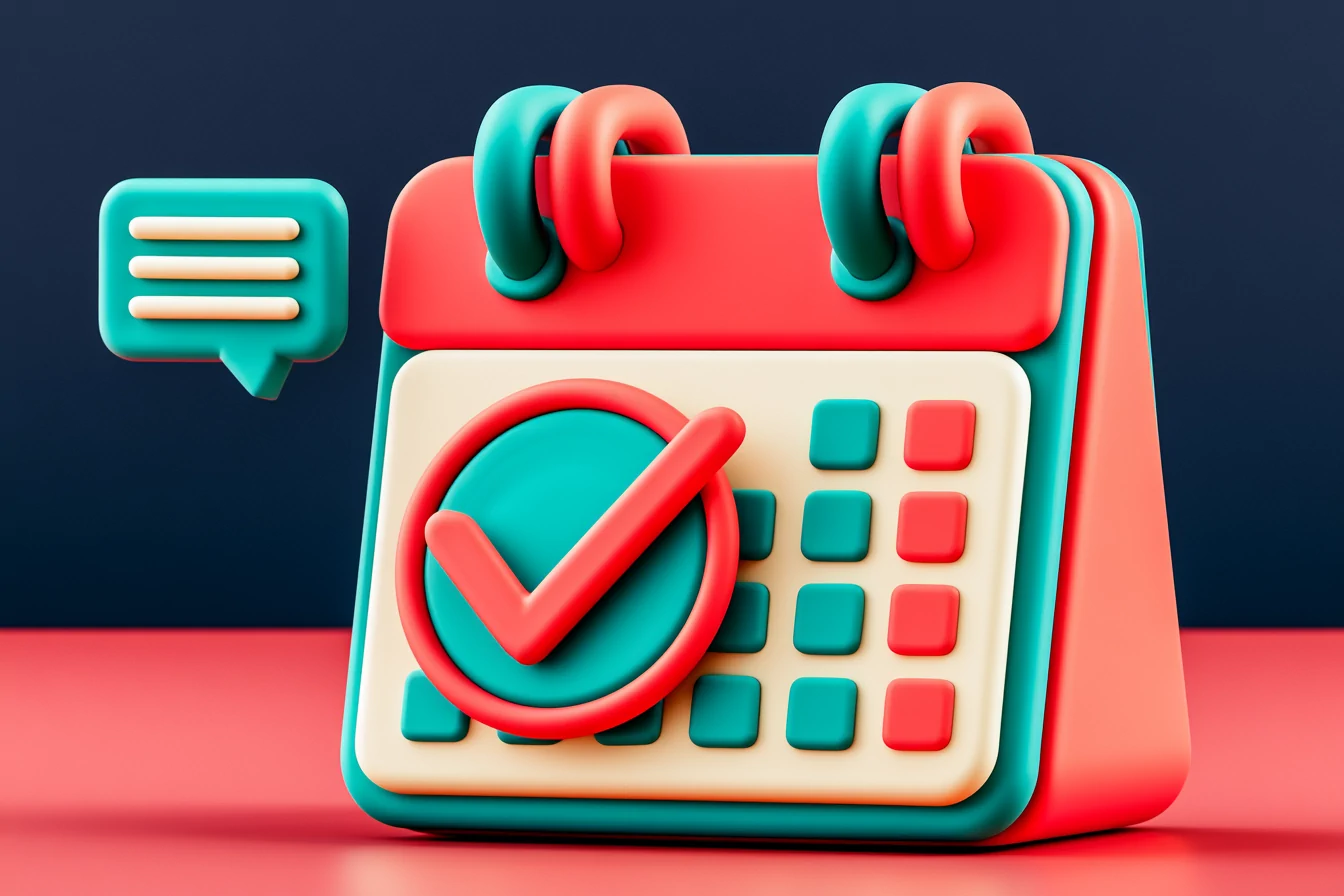
A no-show is a slot that never comes back. A moved appointment is the same calendar, full. The difference is one question asked in time.
How to automate all this with an AI-plus-human platform
You can build this whole cadence by hand, of course. But then someone has to remember to send every reminder, read every reply, open the calendar, offer the slot, and notify the waitlist. Multiply that by all your appointments and it collapses on its own. The point of a platform like TotemAI is that the work of reducing no-shows happens by itself, without you keeping watch.
TotemAI sends the reminders by WhatsApp and voice at the right moment, with a button to confirm or reschedule in one tap. Because it syncs with Google Calendar and Microsoft Calendar in real time, it never offers a slot that's already taken: it reads your real availability and reschedules within it. When a client confirms, moves, or cancels, the AI updates your lead board on its own —no Zapier, no brittle rules— and triggers the waitlist if a slot opens up. If you set up the scheduling side well from the start, all of this clicks into place: we walk through it step by step in how to book appointments straight into your calendar.
−35%
fewer no-shows, according to our clients
+50%
more appointments, according to our clients
24/7
reminders without you keeping watch
These are signals we see across Totem clients, not a promise: every business starts from a different point and results vary. But the logic repeats —when you remind well and make rescheduling easy, more people show up—.
What you pay for, and what you don't
A note that tends to put people at ease: you pay a flat monthly plan with minutes and messages included, so the cost is predictable month to month. Usage —the minutes the AI talks and the messages it sends— draws down that allowance; if you run short in a given month, you add a one-time top-up, and you can set a spend cap. Plans run as a monthly subscription in euros (net, plus applicable tax) —Chat/Messages €49 (chat only), Calls €99 (voice), Pro €179 (voice + chat, the most popular), Studio €399, and Scale from €799 a month— the annual plan comes with two months free, and there's no lock-in. We handle setup for you, and you're live in 48–72 hours.
The takeaway is simple: no-shows are almost never bad faith, they're slip-ups. And slip-ups are prevented with a question asked in time, on the right channel, with a button to reschedule. That's active confirmation, and it's the difference between an empty slot and a full calendar.
Official sources
Frequently asked questions
What exactly is a no-show?
It's a booked appointment the client doesn't show up for and doesn't cancel with enough notice to fill the slot. That's exactly what separates it from a cancellation: a timely cancellation lets you react; a no-show leaves you an empty slot you never get back.
Why does active confirmation beat a plain reminder?
Because it asks for a response. A passive reminder informs but doesn't force a decision; active confirmation asks 'Can you confirm?' and gets a yes/no. That yes commits the client, and that no reaches you hours ahead, with time to fill the slot from your waitlist.
Why WhatsApp or voice, not just email?
It comes down to open rates. Email too often sits unread in the inbox; WhatsApp gets opened almost every time, and voice reaches the people who don't check messages. Totem sends reminders by WhatsApp and voice, at the right moment, with a button to confirm or reschedule in one tap.
Does the AI reschedule on its own, or do I have to?
The AI reads your Google or Microsoft calendar in real time and offers slots that actually exist, so it reschedules within your availability without you touching a thing. If you'd rather sign off on certain cases, a human takes over the conversation in one click, with the full context.
How much can you actually reduce no-shows?
It depends on your starting point: a calendar with no reminders drops further than one that already confirms. We don't promise a fixed number. Among our clients, we see up to −35% no-shows as a common signal, not a guarantee, when they combine active confirmation, one-tap rescheduling, and a waitlist.
Do I need to charge a deposit or no-show fee to cut no-shows?
It's not the first step. Active confirmation cuts no-shows without friction or annoyed clients. A deposit or no-show fee is a later lever for specific cases, not your opening move. Start by asking in time and making it easy to reschedule.
Related reading

No-Contract AI Receptionist: Cancel Anytime, No Setup Fee, No Risk
A no-contract AI receptionist for small business: cancel anytime, no setup fee, no penalty. Try it risk-free and go live in 48-72 hours.
Your AI receptionist, set up for you in 48–72 hours (done-for-you)
Your AI receptionist, set up for you in 48–72 hours. We build it, you approve it. No setup fee, no long-term contract, nothing technical to touch.
How Much Does an AI Voice Agent Cost in 2026? The Fine Print
How much does an AI voice agent cost? Per-minute vs flat monthly pricing compared, what's really included, and how to avoid black-box billing.

AI Receptionist Cost: It's Less Than One Missed Call a Day
An AI receptionist costs less than one missed call a day. See the ROI math by industry and why the plan pays for itself the first month.
 Book a demo
 by
by  Totem Studio