
Lead Response Time: The 5-Minute Rule That Decides the Sale
TL;DR
The ideal lead response time is under 5 minutes — the factor that decides the sale more than any other. Per the MIT study (Oldroyd) covered by Harvard Business Review, contacting a lead within the first 5 minutes multiplies your odds of qualifying it versus waiting 30 minutes. The fix isn't more human hurry; it's an instant, 24/7 response: an AI that answers and qualifies on the spot and hands what matters to a person.
Time kills intent. When someone leaves their details or calls in interested, lead response time decides the sale more than price does: whoever answers first wins. The MIT study led by James Oldroyd and covered by Harvard Business Review in "The Short Life of Online Sales Leads" made it clear years ago: contacting a lead within the first 5 minutes hugely multiplies your odds of qualifying it versus waiting half an hour. And yet almost no one answers in time. Here's why that window slips away, and how to set up an instant response that doesn't depend on someone staring at their phone.
The 5-minute rule: the ideal response time for a lead
Let's call it what it is: the window that decides most of your opportunities lasts barely
5 minutes
It's not a marketing hunch. It's what research by Dr. James Oldroyd (MIT), reported by Harvard Business Review, found: contacting a lead within the first five minutes multiplies your odds of qualifying it —of having a real conversation with the right person— versus waiting just half an hour.
x21
greater odds of qualifying a lead by contacting in 5 min vs. 30 min (MIT/Oldroyd study, via Harvard Business Review)
The nuance matters: this isn't about closing the sale in five minutes, it's about reaching the person while they're still thinking about you. When that window closes, the sale often doesn't just get harder: it stops existing.
Why a lead goes cold so fast when you're slow to respond
An online lead isn't like a customer who walks through your store's door. It's someone who, at that very moment, is probably doing three things at once.
They're comparing, not waiting on you
Someone who fills out a form or asks for information almost never does it with you alone. They request quotes from two or three businesses, open several tabs, and go with whoever answers first and best. The first to reply clearly takes the advantage; the rest compete on price or show up after the interest is gone.
Intent has an expiration date
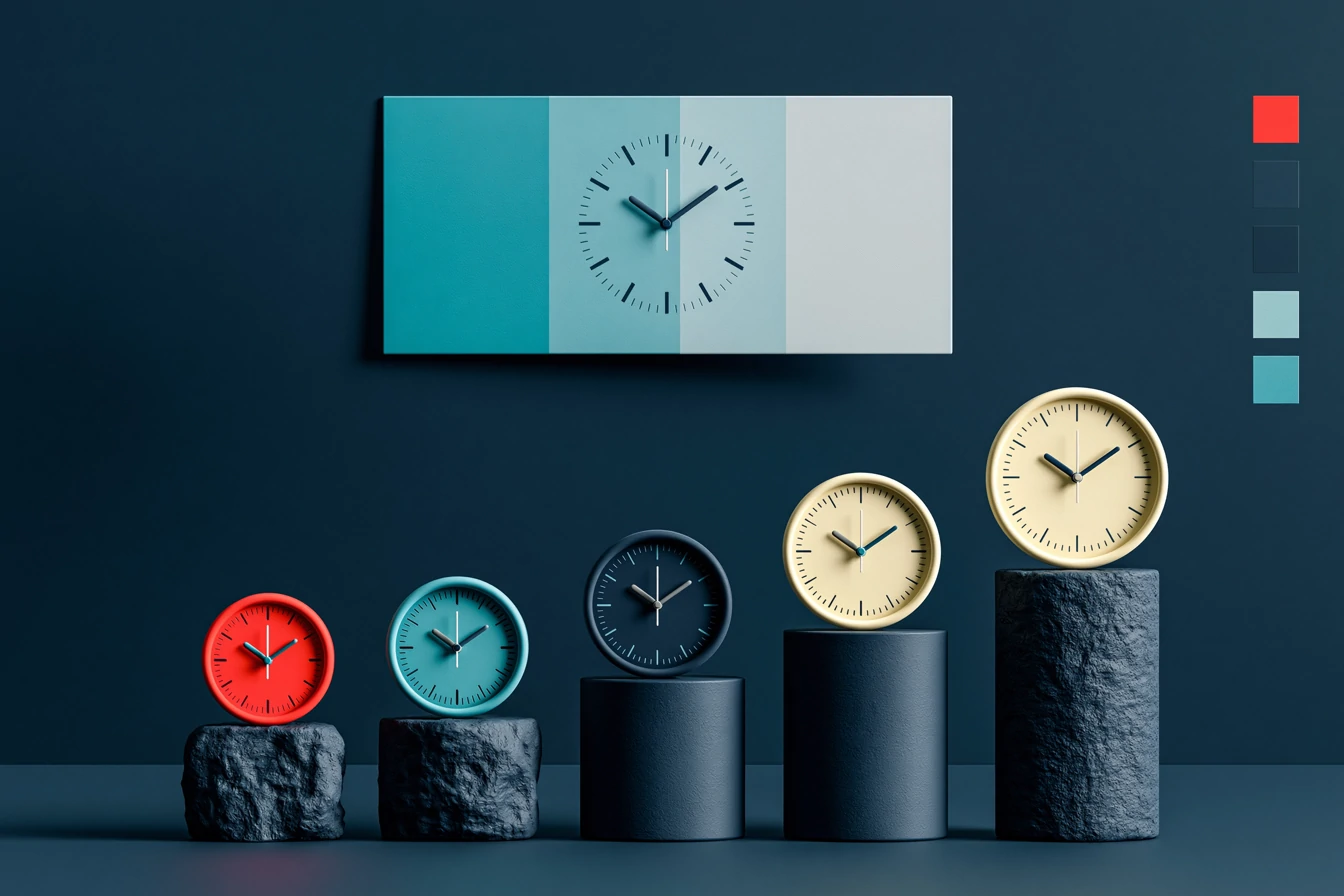
The impulse that leads someone to leave their details is fragile. At five minutes it's still hot. At thirty they've already gotten distracted. By the next day, that "I need this now" urgency has turned into "I'll look into it later." Replying late isn't replying worse: it's replying to a different person, one who wants it less.
After hours, the problem multiplies
Here's the silent trap. A good share of leads arrive when your team isn't there: at night, on weekends, over lunch, in the middle of a call surge. If your response depends on a person being available, every lead that comes in at 9 p.m. on a Friday is born cold. And they're often the highest-value ones: the person looking for an emergency dentist, the one who needs a technician right now.
A slow response time translates into lost opportunities: it's the same hole that explains the real cost of missed calls. Every interaction that goes unanswered isn't a zero; it's a customer walking off to the competition with their problem solved.
The mistake when improving response speed: asking people to hurry more
The instinctive reaction is to push the team: "answer faster, check your phone." It doesn't work, and for good reasons. People sleep, eat, serve other customers, and take weekends off; when five messages come in at once, someone always waits. The 5-minute rule demands perfect consistency, 24/7, that no human team can sustain without burning out.
Response speed isn't an attitude problem. It's an availability problem. And availability problems are solved with systems, not more effort.
The automated response chain that wins the race
Answering fast is useless if you drop the conversation afterward. Speed opens the door; what converts is the full chain. Here's the sequence that actually beats the clock:
Detect it instantly
A call, a WhatsApp, a form, an Instagram DM. The lead lands in one unified inbox the same second, no matter the channel.
Pick up in ~1 second, reply right away, 24/7
The AI picks up the call in ~1 second and answers messages right away —by day, at night, and on weekends— with a useful greeting in the person's own language. No one is left waiting.
Qualify in the conversation
It asks the essentials: what they need, when, where, and how urgent it is. It tells the curious apart from the customer ready to buy.
Book without friction
If there's intent, it books straight into your calendar based on your real availability and sends the confirmation. The opportunity is locked in before it cools off.
Follow up like a human
If they don't reply, a friendly follow-up cadence nudges just enough. A 'no' stops the sequence: you accompany, you don't harass.
The key point is the second step. While your competition takes thirty minutes —or three hours— to return a call, you've already greeted, qualified, and in many cases booked. Here's what our clients typically see once they put the chain to work 24/7:
60%
less response time, according to our clients
+55%
more leads treated as a real priority
+40%
more demos booked
+35%
improvement in close rate
AI first, human when it matters
AI doesn't replace your team: it frees it. The model that works is AI first, a person in one click. The AI covers the part no human can cover well: being available always and responding instantly. It handles calls, WhatsApp, Instagram, Messenger, text, and web chat in seconds, qualifies, and books. But the moment the conversation calls for human judgment —a negotiation, a delicate case, someone who'd rather talk to a person— your team takes over in one click, with the full context already in front of them: who they are, what they asked for, what's been discussed. It's a warm handoff, not a "let's start from scratch."
That's how you meet the 5-minute rule without asking anyone to live glued to their phone, and you save your team's time for the conversations where they truly add value.
The machine provides the speed. The person provides the judgment. Winning the race isn't choosing between the two: it's putting them in the right order.
Fast doesn't have to mean cold or opaque
Answering instantly with AI only works if you do it with transparency. The strictest baseline to hold yourself to is Europe's: under the EU AI Act (Regulation (EU) 2024/1689, art. 50.1), when an AI converses directly with a person, that person must be told they're interacting with an AI system; and when the AI handles personal data (recordings, transcripts, contact details), that processing has to comply with the GDPR (Regulation (EU) 2016/679) —a legal basis, notice to the individual, and the appropriate safeguards. If you take calls from or handle the data of EU residents, those rules apply to you directly; if you operate only in the US, they aren't mandatory, but they're the highest bar around —and the FTC and state privacy laws like the CCPA point the same way, while the TCPA governs how you're allowed to call and text. As a matter of service and trust, it's also good practice to always offer an easy way to reach a person —though, for a booking or reception assistant, that doesn't by itself stem from the "right to human intervention" under GDPR art. 22, which is reserved for solely automated decisions with legal or similarly significant effects; a booking bot doesn't make that kind of decision. An immediate, useful, honest reply reads as good service. What really bothers a customer isn't the AI: it's silence.
How to cut your lead response time to under 5 minutes
You don't need to reinvent your operation; you need to make sure no lead reaches a channel without a response. In practice, setting up an automated response that meets the 5-minute window with TotemAI means:
- A unified inbox with your 7+ channels in one place, so nothing gets lost between apps.
- An AI that answers first: it picks up the phone in ~1 second and replies to messages right away, 24/7, and qualifies on the fly.
- A Kanban-style lead board where the AI itself moves each lead based on how the conversation went.
- Booking pages synced with Google and Microsoft Calendar, plus WhatsApp and voice reminders to cut no-shows.
- A one-click handoff to a person, with the full context.
Totem sets it up for you, and it's usually live in 48–72 hours. You pay a fixed monthly plan with minutes and messages included, so the cost is predictable month to month.
The essentials on response time
- Lead response time is the factor that decides the sale most: whoever answers first wins, not whoever has the best price.
- According to the MIT study (Oldroyd), covered by Harvard Business Review, contacting a lead in under 5 minutes hugely multiplies your odds of qualifying versus waiting 30.
- Leads go cold because the person is comparing and their intent expires in minutes; after hours, the problem explodes.
- The fix isn't more human hurry, but an instant 24/7 response: AI that answers and qualifies on the spot, and passes what matters to a person.
- Do it transparently: tell people they're talking to an AI (AI Act art. 50.1) and handle data to the GDPR standard —required if you serve EU residents, a premium baseline everywhere else; offering a handoff to a person is recommended best practice.
If you want to go deeper, the AI voice agent is the piece that covers the phone channel in this chain, and if you're torn between automating and hiring, this comparison of an AI receptionist vs. a human receptionist helps you decide without the hype.
The 5-minute rule isn't a promise: it's a race your business runs every day, whether it knows it or not. The good news is that no one needs to be awake anymore to win it.
Official sources
Frequently asked questions
What's the ideal response time for a lead?
Under 5 minutes. The MIT study led by James Oldroyd and covered by Harvard Business Review found that contacting a lead within the first 5 minutes massively multiplies your odds of qualifying it versus waiting 30 minutes. Once those first minutes pass, your chances drop off a cliff.
Why do online leads go cold so fast?
Because someone who leaves their details is usually comparing several options at once, with high intent right at that moment. If you're slow, someone else answers first, the person loses momentum, or they've already gotten their answer somewhere else. The window of peak intent lasts minutes, not hours.
How do I respond in under 5 minutes after hours?
With an AI that answers calls in ~1 second and replies to messages across every channel right away, 24/7, qualifies instantly, and hands the conversation to a person in one click when needed. That way you hit the response window by day, at night, and on weekends.
Does answering instantly with AI annoy customers?
It doesn't have to. An immediate, useful, honest reply — with a heads-up that it's an AI and the option to talk to a person — usually reads as good service. What bothers people is getting no reply, or one that arrives hours late.
What is the 5-minute rule in sales?
It's the principle that your response time to a lead should be under 5 minutes to keep most of your odds of qualifying it. It comes from the MIT study led by James Oldroyd and covered by Harvard Business Review: the probability of having a useful conversation drops off a cliff with every minute that passes after someone leaves their details.
How can I improve my business's lead response time?
Not by asking people to move faster, but by solving availability with a system. Unify all your channels in one inbox, put an AI that answers first in seconds around the clock, qualifies and books, and leave the handoff to a person in one click for whatever needs human judgment. That way you hit the 5-minute window at night and on weekends too.
Related reading
Lead Response Time: A Channel-by-Channel Self-Audit
Test your lead response time channel by channel with this free audit: find where and when leads slip away, and what to fix first.

Why Leads Go Cold: The 5 Mistakes That Hand Customers to Your Competition
Why leads go cold is rarely your team's fault — it's 5 invisible time leaks. We name each one and show you how to stop losing a single lead.

Why Your Real Estate Business Loses Zillow Leads (and How to Stop It)
You pay for Zillow leads, but the leak comes after: slow replies, after-hours, weak follow-up and duplicates. How to plug it and book more showings.

No-Contract AI Receptionist: Cancel Anytime, No Setup Fee, No Risk
A no-contract AI receptionist for small business: cancel anytime, no setup fee, no penalty. Try it risk-free and go live in 48-72 hours.
 Book a demo
 by
by  Totem Studio