
AI-to-Human Handoff: You Don't Lose the Human Touch, You Concentrate It
TL;DR
The AI-to-human handoff is the moment the AI passes a conversation to a person on your team, live and with the full history in front of them. The AI answers first, filters, and clears the volume 24/7; when it spots a case that needs human judgment, an agent takes over in one click. Your customer repeats nothing, and the person steps in already informed. The human touch isn't lost: it's concentrated where it makes the difference.
If you're hesitating to put an AI on your front line because you're afraid of losing the human touch, here's the short answer: you don't lose it, you concentrate it. The piece that makes it possible is the AI-to-human handoff with context: the AI answers first and clears the repetitive 24/7 volume, but the moment a case comes up that needs judgment or empathy, it passes the conversation to a person on your team with the full history in front of them. If it's a call, the relay happens inside the same call; if it's chat, inside the same thread. Your customer repeats nothing and your agent steps in already informed. The human part doesn't disappear: it stops getting spent on "what time do you open?" and pours into what actually closes. Let's look at how that mechanism works under the hood.
AI and the human touch: why "adding AI" doesn't mean removing people
The most common objection isn't technical, it's emotional: "my customers want a person to help them." And it's a fair one. But it hides a false assumption — that the AI is here to replace your team. In practice, the opposite happens.
Think about what a normal day looks like right now. A good chunk of your contacts are low-complexity noise: hours, prices, "can I get an appointment?" That noise eats your people's time exactly when the delicate call comes in, the complaint that needs calming, or the important customer who deserves to feel heard. You're spending an expensive, empathetic resource on tasks that call for neither dollars nor empathy.
Myth
Adding AI means no customer ever talks to a person again.
Reality
The AI filters the repetitive volume; people take the delicate cases, already with the context in front of them.
Myth
If an AI comes in, the team is redundant.
Reality
The team stops being a switchboard and moves to closing, calming, and building loyalty on what actually matters.
Myth
The customer feels abandoned to a robot.
Reality
It discloses that it's an AI and they can always ask for a person; the relay is immediate, with nothing repeated.
The human touch isn't lost: it's saved for the moments when a person makes the difference. It's a change of casting, not of headcount. We go deep on it in every concern about AI customer service, answered.
What a warm handoff with context is (and why it changes everything)
A warm handoff means passing the conversation from the AI to a person inside the same conversation, live, without a break. On a call, it means someone on your team steps into that same call: no hanging up, no calling back later, no opening another channel. On WhatsApp, Instagram, Messenger, email, or web chat, it means they step into the same thread. The opposite would be a cold handoff: they take a message, open a ticket, or promise "someone will call you back." The customer waits, cools off, and — often — is already talking to your competitor by the time you call back.
When the context is already in front of them, the person stepping in doesn't start by asking: they start by understanding. The customer doesn't repeat their story and can tell you've had them on file since the first message.
The "warm" part changes everything because it removes the gap. In a classic call center, every jump between people forces the customer to start from zero — and that "tell me the whole thing again from the top" is exactly what erodes the sense of good service. Here the conversation is a single one; the only thing that changes is who's carrying it at any given moment.

How the AI decides when to hand off to a human agent
The relay isn't random or a whim of the system: it triggers on signals you define. The idea is for the AI to handle what it's good at and raise its hand the moment something comes up that calls for a person.
The AI answers first
It picks up the phone in ~1 second and answers your messages — WhatsApp, Instagram, Messenger, SMS, or web chat — right away, 24/7. No one waits or drops into voicemail.
It qualifies and clears the volume
Hours, prices, first questions, booking and moving appointments on your calendar. Most contacts get closed out right here.
It spots the human case
An explicit request to talk to someone, a heated complaint, a delicate negotiation, or something off-script. The AI identifies it and prepares the relay.
Warm handoff
Your agent takes the same call or the same thread with the full history in front of them. The customer repeats nothing; the person steps in already informed.
Notice what each layer is good at. The AI shines at availability and speed — it answers several conversations at once, including at nine on a Sunday night; a person shines at empathy, judgment, and negotiation. The AI doesn't decide who's in charge: it filters the noise so your team only sees what needs a human. And it's worth remembering why speed matters so much: a study by MIT's James Oldroyd, popularized by Harvard Business Review, found that reaching a lead within the first 5 minutes makes you 21 times more likely to qualify it than waiting until 30. The AI holds that window open from the first second; your people supply the finishing touch.
Your customer never repeats their story: the context travels with the conversation
This is the piece that separates a real hybrid from two systems taped together. When the agent takes the relay, they don't get a curt "handle this customer" ping: they get the whole conversation. Who they are, what they've asked, what the AI answered, on which channel, in what tone. All in one unified inbox that brings WhatsApp, Instagram, Messenger, SMS, email, and voice together in a single place.
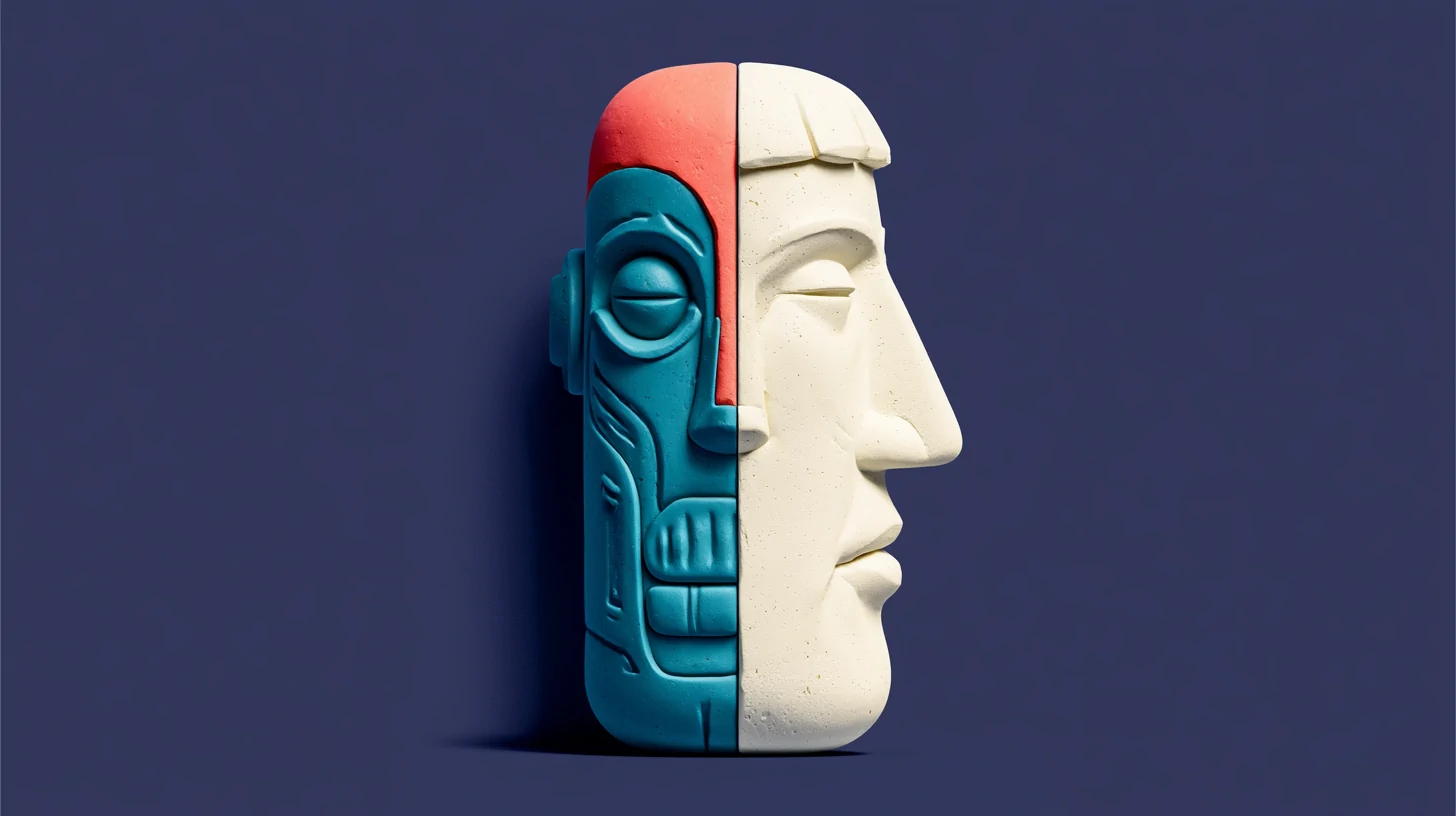
Context traveling has an effect that goes beyond convenience. It lowers customer effort — the single best predictor of whether they stay or go — and signals that your business has them on file, not that they've dropped into an anonymous voicemail. According to our clients, that attention to detail shows up in the numbers across the board.
60%
less response time, according to our clients
+55%
more leads treated as a priority, at a typical small business
+35%
improvement in close rate, according to our clients
Behind that continuity there's a detail that also works in your favor: by default we host data in the EU — our own design decision; the GDPR doesn't require data to stay in the EU, only that any transfer outside it carry adequate safeguards (GDPR Ch. V) — and, when the AI is handling things, it discloses that it's an automated system, in line with the AI Act's transparency duty (Regulation (EU) 2024/1689 — the AI Act — art. 50.1). That AI Act duty binds you if you serve EU customers; elsewhere, disclosing it up front is simply best practice — and the kind of transparency US regulators like the FTC expect. Hosting to that standard even where no law requires it means the guarantee travels with you. Transparency doesn't break the magic; if anything, it gives the customer the confidence to keep the conversation going without second-guessing it.
Your team stops being a switchboard and starts closing what matters
The last effect is the one your people feel. When the AI absorbs the noise, your team stops living in firefighting mode on the phone and starts spending its time on the conversations that move the needle: the complaint that's calmed with tact, the sale that's closed with a couple of nuances, the loyal customer who wants to feel looked after.
And they don't work alone. While they talk, your Kanban-style lead board moves based on the outcome of each call — no Zapier — follow-up cadences stay human (one "no" pauses the sequence), and the Draft Helpers, backed by your knowledge base (RAG), draft the next message from the lead's context. The person brings the judgment; the platform takes the mechanical busywork off their plate.
0 times your customer repeats their story
There's also a cost detail worth underlining, because it tends to be the last question from whoever pays the bills: with TotemAI you pay a fixed monthly plan with an allotment of minutes and messages included. Usage draws down that allotment — the minutes the AI talks, whether it takes the call or places it, and the messages it handles — and if you come up short one month, you extend with a one-time top-up and can set a spending cap. So the cost is predictable month to month, instead of a meter that spikes with every contact.
What matters
- "Adding AI" doesn't remove people: it concentrates the human touch where it makes the difference.
- Warm handoff = the relay happens live, inside the same call or the same thread, with no gap.
- The context travels with the conversation: the agent steps in reading, the customer repeats nothing.
- The AI triggers the relay on signals you define — a request for a person, a complaint, a delicate case.
- Built to the EU standard: customers are told they're talking to an AI (AI Act transparency, art. 50.1), an option to escalate to a person, and data hosted in the EU by default (our choice, not a GDPR requirement).
If you want to see how this fits into a bigger picture, there's the breakdown in AI or call center: you can have both and the comparison in AI receptionist vs. human receptionist. The human touch isn't what you lose with a well-built AI: it's exactly what you get back.
This is general information, not legal advice: for your specific situation, consult your DPO or an attorney.
Official sources
Frequently asked questions
What is a warm handoff with context?
It's when the conversation passes from the AI to a person without a break and with the full history visible. The agent steps in reading what's already been said, so your customer doesn't repeat their story. 'Warm' means the relay happens inside the same conversation, live — not in a new email or a callback hours later.
Does the customer know when they stop talking to the AI?
Yes. When the AI is handling things, it discloses that the customer is talking to an automated system, and the customer can always ask for a person. At that point the handoff triggers and an agent picks up the conversation with the context in front of them. Transparency is part of the product, not an add-on.
How does the AI decide when to pass the conversation to a human?
By signals you define: an explicit request to talk to someone, an emotionally charged complaint, a delicate negotiation, or a case outside the usual script. When one of those signals shows up, the AI prepares the relay and alerts your team, who picks up the conversation in one click from the web or the iOS and Android apps.
Do I lose the human touch if I put an AI on the phones?
Just the opposite. The AI absorbs the repetitive noise so your people aren't stuck being a switchboard and can spend their time on the conversations that actually close, calm, or build loyalty. The human touch doesn't disappear: it gets concentrated where it makes the difference, and it arrives better prepared thanks to the context.
Which channels does the AI-to-human handoff work on?
All the ones the AI handles, unified in a single inbox: WhatsApp, Instagram, Messenger, SMS, web chat, and voice. The agent takes the relay on the same channel the customer is on, with the history in front of them, without moving them somewhere else or opening a new email.
Does the customer have to wait while the AI passes the conversation along?
There's no gap: the relay happens inside the same conversation, live. The AI keeps the thread going while it alerts your team, and when an agent steps in, they do it reading what's already been said. It's the exact opposite of a cold handoff, where a ticket gets opened or a call is promised for hours later.
Related reading

Franchise & Multi-Location CRM: Give Every Branch Its Own WhatsApp and Channels
One CRM for franchises and multi-location businesses: give every branch its own number, WhatsApp and channels while HQ sees the whole group in one view.

AI Receptionist Results for Small Business: +43% Bookings, −62% No-Shows, Double the Sign-Ups (With the Fine Print)
Real AI receptionist results for small business: +43% bookings, -62% no-shows and double the sign-ups, with the fine print on every figure.

AI Agent for Accounting Firms: Answers From Your Own Knowledge (RAG)
An AI agent for accounting firms answers repeat questions from your own knowledge base (RAG), qualifies each case, and books the consultation.

Multilingual AI Customer Service, Without Hiring More People
Multilingual AI customer service replies in each customer's language by voice and chat, 24/7. One team covers every language without extra hires.
 Book a demo
 by
by  Totem Studio