
AI Voice Agent for Restaurants: Take Reservations Without Picking Up the Phone
TL;DR
An AI voice agent for restaurants answers the phone in ~1 second and takes the reservations your team can't get to during the rush. It handles bookings and changes by voice and WhatsApp 24/7, sends reminders that curb no-shows, and only passes a call to a person when it's genuinely needed. And you pay for it with a flat monthly plan that includes minutes and messages.
Yes: an AI voice agent for restaurants can take reservations while your team is plating up, without anyone having to pick up the phone. It answers in about a second, checks real availability, confirms the table, and, if things get complicated, hands the call to a person with full context. What follows is how that fits into a real service, where it saves you empty tables, and what it costs (hint: a flat monthly plan with minutes and messages included, so you know what you pay each month).
Why restaurants lose reservations by phone during the rush
Two in the afternoon. Dining room full, orders coming in, two servers for twelve tables. And the phone, ringing. Nobody can pick up without abandoning a guest who's already seated. So it rings, and rings, and eventually goes to voicemail or, worse, to nothing. The caller wanted a table for six on Friday. They hang up and call the place across the street.
That call wasn't an interruption. It was a reservation. And it just turned into an empty table on a Friday night, which is exactly the night you can't afford to have gaps.
The problem isn't your team. It's physical: one person can't work the floor and the phone at the same time during the rush. And the phone always rings during the rush, because that's when people are thinking about eating. If you only have one line on top of that, the second reservation call hits a busy signal and that customer won't try again. Your restaurant's phone coverage, right when the most tables are on the line, is the first place customers slip away.
~1 s
to answer, 24/7
−35%
no-shows, according to our clients
+50%
more appointments and reservations booked
Flat
monthly plan, no surprises
How an AI voice agent for restaurants takes reservations by voice and WhatsApp 24/7
An AI voice agent picks up on the first ring, every time. It doesn't get tired, it isn't plating up, it doesn't have a bad day. And it isn't limited to the phone: the same assistant also handles WhatsApp, Instagram, Messenger, text, and web chat, all in a single dashboard. It doesn't matter which channel the customer reaches you on.
Good morning, this is Northside Clinic. How can I help you?
Hi, I need to move my appointment to Friday.
No problem. Friday at 11:00 is free, shall I confirm it?
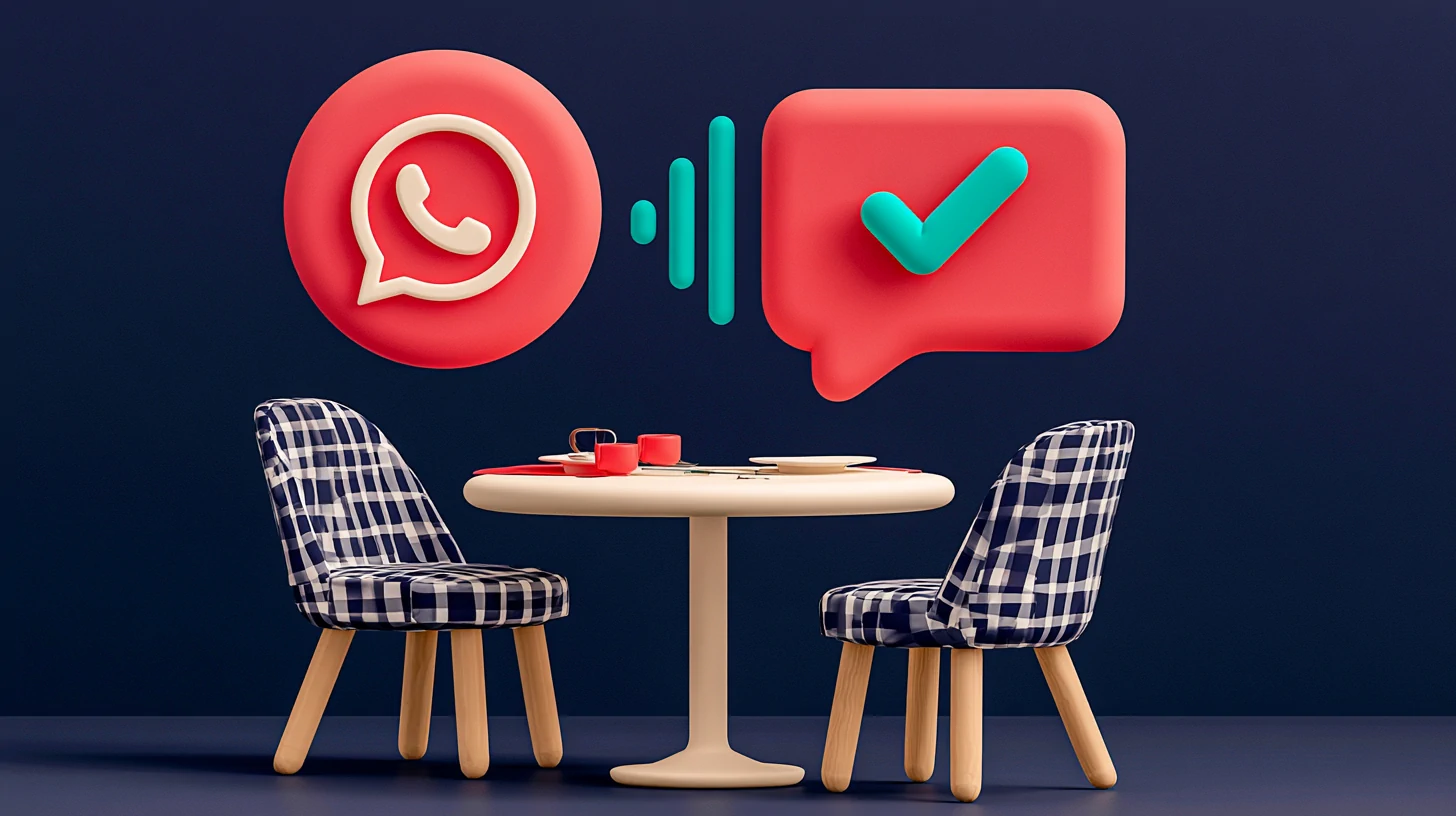
Here's what it does on a normal reservation, without anyone on the floor stepping in:
Answers and introduces itself
Checks real availability
Confirms the table
Handles changes and cancellations
The interesting part isn't just the new reservation. It's the last-minute change. "Hey, turns out we're four, not six." "Can we push it to nine thirty?" Those calls, which normally eat up a minute of your server's time at the very peak of service, the agent handles without breaking a sweat. And when someone cancels, that slot becomes available again automatically for the next reservation.
It also works in multiple languages, which helps if you get tourists: the agent takes the reservation in whatever language the caller speaks. If you want to see how this same booking logic applies to other appointment-based businesses, the AI agents by industry playbook breaks it down, and to understand the technology under the hood there's the full guide to an AI voice agent for business.
Reservation reminders that curb restaurant no-shows
The ghost reservation is the other hole money falls through. A table for eight on a Saturday that never shows, and you've turned away the people who would have come. According to restaurant-industry data compiled by OpenTable, around 20% of unconfirmed reservations end in a no-show. A large table that doesn't arrive on a Saturday can be the whole night's margin.
The defense against that isn't charging everyone a deposit (though sometimes it helps). It's active confirmation: a reminder by WhatsApp or voice a few hours ahead, with a clear button to confirm or cancel.
When a customer cancels from the reminder, the slot opens up and you can offer it to another reservation or your waitlist. It's the difference between an empty table at nine and a table that earns. According to our clients, this reminder approach cuts no-shows by around 35%. We go deeper on the exact cadence that works in the guide to reducing no-shows.
Handing off to your team only when it's truly needed
This is where a good agent separates itself from a 1990s touch-tone menu. The AI doesn't try to solve everything. It handles the repetitive stuff (reservations, changes, hours, whether you have a patio, whether there are gluten-free options) and recognizes when a conversation needs a person.
Myth
If I bring in an AI, I lose the human touch that sets my restaurant apart.
Reality
The AI takes the mechanical part. A large event, a serious allergy, a complaint: that goes to a person on your team in one click, with the full context of the call already written down.
Myth
Customers get annoyed when they realize they're talking to a machine.
Reality
They get annoyed when nobody picks up the phone. The agent says it's an AI and, if the caller asks to speak with someone, puts them through to a person. No menu mazes.
The handoff is warm: when the conversation jumps to your team, the person sees who's calling, what they wanted, and what's already been said. Nobody has to repeat anything. If you take reservations from or handle the data of EU residents, the EU AI Act (Regulation (EU) 2024/1689) requires telling people they're talking to an AI, and a reservation bot is a limited-risk system, not high-risk; either way, disclosing it up front is good practice everywhere (and what the FTC and state law point toward), and the agent does it at the start. Letting a caller reach a person when they ask isn't a general legal requirement —a reservation bot doesn't make the kind of solely-automated decision with legal effects that GDPR Article 22 covers— but it is a trust best practice, and here it comes built in. Where EU residents' data is involved, it's handled under GDPR, with the Chapter V safeguards for any transfer; Totem holds to that EU-grade standard by default. This is informational, not legal advice.
The AI doesn't replace your host. It takes forty reservation calls off their plate so they can be in the dining room, which is where they really add value.

What it costs: a flat monthly plan, no surprises
This is the part that throws almost everyone, so let's get to it: with Totem you pay a flat monthly plan with minutes and messages included. Usage draws from that allowance: the minutes the AI talks and the messages it sends count, whether the calls come in or go out. The advantage isn't that inbound is free, it's that you know what you pay each month; and if a packed Friday leaves your allowance short, you top up with a one-time add-on and can set a spend cap.
Flat
a monthly plan with minutes and messages included
For a restaurant, where the bulk of the volume is calls coming in looking for a table, this completely changes the math versus a traditional answering service with a per-minute meter that runs away: a flat plan with an included allowance is far easier to budget for.
| With an AI agent | Traditional service | |
|---|---|---|
| How you pay | Flat monthly plan with an included allowance | Per-minute meter that runs away |
| Availability | 24/7, including nights and holidays | Business hours |
| Reservations and changes by WhatsApp | Yes, same agent | Usually not |
| Anti-no-show reminders | Included | Separate or nonexistent |
Plans run from Chat (€49/mo) and Voice (€99/mo) up to Pro (€179/mo, the most popular), all plus applicable tax, with annual billing working out to two months free, no lock-in, and live in 48–72 hours. Most restaurants start with voice plus WhatsApp because that's where the money is: the reservations.
Key takeaways
- During the rush nobody can pick up; every missed call is an empty table. The agent answers in ~1 second, every time.
- It takes reservations and changes by voice and WhatsApp 24/7, checking real availability so tables aren't double-booked.
- Reminders with active confirmation cut no-shows by around 35% (according to our clients).
- It hands your team only what truly needs a person, with a warm handoff and full context.
- You pay for it with a flat monthly plan that includes minutes and messages: you know what you pay each month, and if a spike leaves you short you top up with a one-time add-on.
An AI voice agent won't make your kitchen better. But it will make sure everyone who wants to eat at your restaurant gets a table, instead of hanging up and calling the place next door. And this isn't unique to hospitality: if you manage a schedule in any industry, see how the same AI booking assistant for hair salons and beauty studios works.
Frequently asked questions
Does the AI voice agent sound like a robot on the phone?
Today an AI voice agent answers in English in about a second, with a natural voice. It says up front that it's an AI and, if the caller prefers, hands the call to a person on your team with full context.
How does it connect to my reservation system?
The agent uses booking pages synced with your calendar (Google or Microsoft) or your shift sheet. It takes the reservation, checks real availability, and confirms it without anyone on the floor having to touch the phone.
How much does it cost to handle the calls coming into the restaurant?
You pay a flat monthly plan with minutes and messages included. Usage draws from that allowance: the minutes the AI talks and the messages it sends count, whether inbound or outbound. If you run over in a given month, you top up with a one-time add-on and can set a spend cap, so the cost stays predictable.
Does it also handle WhatsApp, not just the phone?
Yes. The same agent answers calls and messages from WhatsApp, Instagram, Messenger, text, and web chat, all in a single dashboard, so no table request goes unanswered.
Does an AI voice agent help reduce restaurant no-shows?
Yes. It sends a reminder by WhatsApp or voice a few hours ahead with a button to confirm or cancel in one tap. When someone cancels, the slot frees up automatically for your waitlist. According to our clients, this approach cuts no-shows by around 35%.
Can it handle several reservation calls at once during the rush?
Yes. Unlike a single phone line, the agent handles several reservations in parallel, so at the midday peak or on a packed Friday no call is lost to a busy signal.
Related reading

Franchise & Multi-Location CRM: Give Every Branch Its Own WhatsApp and Channels
One CRM for franchises and multi-location businesses: give every branch its own number, WhatsApp and channels while HQ sees the whole group in one view.

AI Receptionist Results for Small Business: +43% Bookings, −62% No-Shows, Double the Sign-Ups (With the Fine Print)
Real AI receptionist results for small business: +43% bookings, -62% no-shows and double the sign-ups, with the fine print on every figure.
AI Agent for Accounting Firms: Answers From Your Own Knowledge (RAG)
An AI agent for accounting firms answers repeat questions from your own knowledge base (RAG), qualifies each case, and books the consultation.

Multilingual AI Customer Service, Without Hiring More People
Multilingual AI customer service replies in each customer's language by voice and chat, 24/7. One team covers every language without extra hires.
 Book a demo
 by
by  Totem Studio