
Appointment Cancellation Policy Template (Copy & Paste) for Clinics, Salons and Med Spas
TL;DR
A good appointment cancellation policy template fits in three sentences: how much notice you ask for, what happens if they don't show, and how to cancel easily. Here's the editable base template plus three variants (clinic/dental, salon, med spa), the short versions for your website, confirmation and 24-hour reminder, and how an active reminder enforces it without you arguing with anyone.
An appointment cancellation policy template people actually respect doesn't need lawyers or threatening all-caps: it fits in three sentences. How much notice you ask for, what happens if they don't show, and how to cancel without having to call ten times. Here you'll find the copy-paste base template, three industry variants (clinic and dental, salon, med spa) and the short versions for your website, confirmation and reminder. And, at the end, the trick that makes it enforce itself: remind on time instead of arguing later.
What a policy people respect must say (and what it mustn't)
The most common mistake is thinking a strict policy scares people more. It doesn't. What really stops no-shows is the customer knowing, clearly and in time, what's expected of them, and canceling being as easy as booking. An aggressive fee buried in a two-page PDF: nobody reads it. A friendly line repeated at the right moment: they do.
A respectable policy answers just three questions:
Key takeaways
- Notice: how far ahead they need to tell you to cancel or reschedule (24 hours is the standard; 48 hours for long services).
- Consequence: what happens if they don't tell you or don't show up (losing the deposit, a charge, or going to the back of the line).
- Ease: how to cancel in one click, no calls or business hours. If canceling is hard, people don't cancel: they just don't show up.
And what it shouldn't do: threaten, use all-caps, hide in fine print or sound like a cell phone contract. Tone matters. "If you can't make it, let us know 24 hours ahead and we'll free up your slot" beats "FAILURE TO COMPLY WILL RESULT IN A PENALTY" every time.
A note on the legal side, because it's the first thing everyone asks: charging a deposit or a no-show fee is, generally, defensible if you communicated it clearly before the appointment and the customer accepted it as part of the booking terms. The key is transparency: make it a known, accepted condition, not a surprise charge. That's why the template is designed to be seen when booking, in the confirmation and in the reminder. Surprises generate bad reviews; things people were warned about don't. (This is general guidance and depends on your terms and your industry; it isn't legal advice.)
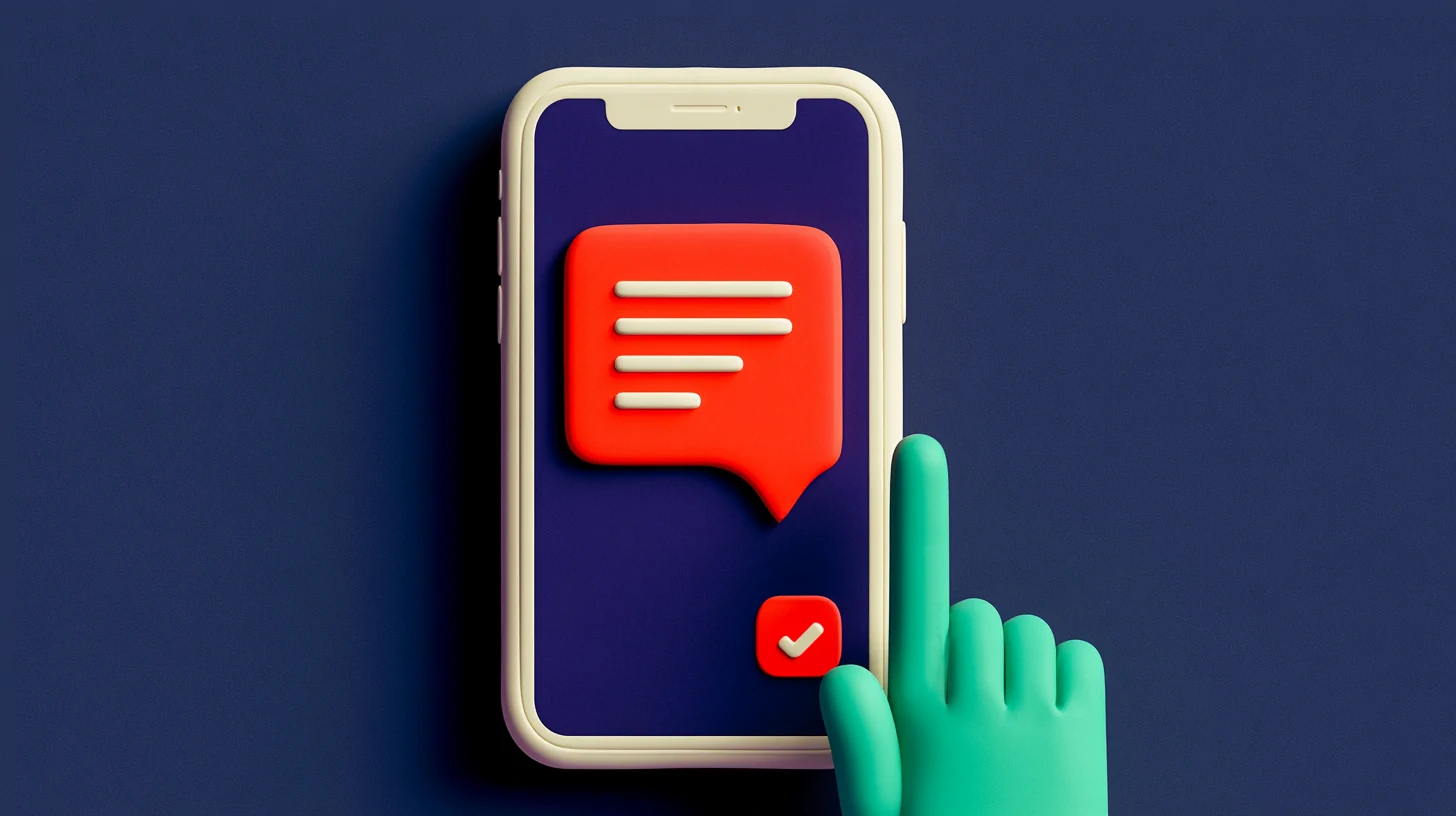
Appointment cancellation policy template (copy & paste)
This is the base template: copy the text, change what's in brackets and publish it. It's deliberately short, in plain English, so a person reads the whole thing without skipping it.
Cancellation policy for YOUR BUSINESS We get that things come up. We only ask one thing: give us 24 hours' notice if you need to cancel or change your appointment, so we can offer your slot to someone else.
- Cancellations with less than 24 hours' notice or no-shows: you forfeit the $X deposit / a $X charge is applied to your next booking / you move to the back of our waitlist.
- To cancel or reschedule: reply to this message, or use the link in your confirmation. It takes less than a minute. Thanks for respecting our time and that of our other customers. See you soon.
Three decisions to make before you publish it: the notice period (24 or 48 hours), the consequence (deposit, charge or waitlist) and the cancellation channel (the same one they booked through). If you're torn between charging a deposit or a no-show fee, compare no-show fee vs. deposit, because they don't cut the same thing depending on the industry.
Template variants by industry: clinic, salon and med spa
Same skeleton, different wording. The notice period and the consequence change depending on what you're booking (a provider, a treatment room, a short slot). These are the three versions of the template we use most with real clients.
Clinic and dental
Long appointments, a provider blocked off, sometimes materials prepped. Here, 48 hours and a deposit make sense.
At Clinic X we reserve time and a provider just for you. If you can't make it, give us 48 hours' notice and we'll rebook it at no cost. No-shows or cancellations with less than 48 hours' notice forfeit the $X deposit. To change your appointment, reply to this text or call us at phone.
Salon
High volume, shorter appointments, lots of repeat clients. Here, friendliness and ease come first: 24 hours and a waitlist.
We can't wait to see you! If something comes up, give us 24 hours' notice and we'll happily move your appointment. If you can't give notice in time more than once, we'll ask you to confirm with a small deposit on your next booking. Canceling or moving your appointment is easy: just reply to this message.
Med spa
Package-based sessions, treatment rooms and devices booked exclusively. 48 hours, and the session counts as used if there's a no-show on a package.
Your session at Spa X reserves a treatment room and a provider exclusively. Cancellations with less than 48 hours' notice or no-shows: on packages, the session counts as used; on single appointments, you forfeit the $X deposit. Something come up? Message us and we'll find a new slot together.
Where to put your cancellation policy so it gets read
A perfect policy on a tab nobody opens is worth nothing. It has to appear at three moments, shorter each time:
| Where | Version | Example |
|---|---|---|
| Booking page | Full | The base text, visible before confirming. |
| Confirmation | Medium | “Remember: cancel 24 hours ahead by replying to this message.” |
| 24-hour reminder | Minimal | “Confirming your appointment tomorrow? Yes / Change.” |
The idea is decreasing repetition: full at booking, a reminder in the confirmation and a single sentence in the 24-hour notice. That way no one can say "I didn't know," while you also don't hammer your customer with a wall of text in every message. To decide which channel to send each reminder on (they don't all perform the same), compare text vs. email vs. WhatsApp for appointment reminders.
How to make your cancellation policy enforce itself
Here's the real secret. A written policy is an intention; an active reminder is what turns it into reality. The difference between "we text you and pray" and "we ask you and you answer" is huge.
With TotemAI, the reminder isn't a one-off message: it's a conversation. The AI answers the call in ~1 second and messages—WhatsApp or text—right away, 24/7, and handles the full cycle without you picking up the phone.
Remind ahead of time
Ask for active confirmation
Reschedule or free up the slot
A human in one click
This matters because, according to our clients, moving the reminder from "informing" to "actively confirming" is what really brings no-shows down: we've seen reductions of up to −35% in no-shows and a +50% in appointments when the system confirms and reschedules on its own. The policy stops being a sign nobody respects and starts being enforced at every appointment, friction-free.
−35%
No-shows with active confirmation
+50%
More appointments handled
~1 s
Time to answer the phone, 24/7
And it's all built for compliance. When the AI speaks, it says so—a clear notice that you're talking to an AI system. That's the transparency duty Regulation (EU) 2024/1689—the AI Act—places on these systems (AI Act, art. 50.1): if you take calls from or handle data of people in the EU, it applies to you, and either way disclosing the AI is simply good practice (the FTC and several US states expect it too). As a matter of trust—not because a booking bot is legally required to—the customer can always ask to be handed to a person. And we host data in the EU: GDPR doesn't require data to stay in Europe (it permits international transfers with adequate safeguards, Ch. V, arts. 44–49), but keeping it here is our choice. A respectable policy also respects the person reading it.
If you want to dig into the full confirmation system behind all this, it's in how to reduce no-shows. And if what you want is to just set it up without wrestling with four different tools, we get it live in 48–72 hours.
Official sources
Frequently asked questions
How much notice should I ask for to cancel an appointment?
The usual is 24 hours, and 48 for long or multi-person services (clinics, med spa treatments). What matters isn't the exact number but that it's clear, reasonable and easy to follow: if canceling takes three clicks, people let you know.
Is it legal to charge for a no-show?
Generally it's defensible if you communicated it clearly before the appointment and the customer accepted it as a condition of booking. The key is transparency: make the policy visible when booking, in the confirmation and in the reminder, so it's a known condition and not a surprise charge. This is general guidance and depends on your terms and your industry; it isn't legal advice.
Does a strict policy cut no-shows more?
Not necessarily. What cuts no-shows most is reminding on time and asking for confirmation, not how harsh the penalty is. A clear, friendly policy paired with an active reminder stops more no-shows than an aggressive fee nobody reads.
Where should I put the policy so people actually read it?
In three places: the booking page (at confirmation), the confirmation message and the 24-hour reminder. Repeated in a short version, not in a long PDF nobody opens. That way no one can say they didn't know.
How do I write an appointment cancellation policy people will respect?
Answer just three questions in a couple of sentences: how much notice you ask for, what happens if they don't show, and how to cancel in one click. Friendly tone, no all-caps and no fine print. The copy-paste base template is above, with variants for clinics, salons and med spas.
Does the same template work for a clinic, a salon and a med spa?
The skeleton is the same, but the notice period and the consequence change. For clinics and med spas, 48 hours and a deposit make sense because you're blocking a provider or a treatment room; for salons, 24 hours and a waitlist are usually enough. All three variants are written out in the article.
Related reading

No-Contract AI Receptionist: Cancel Anytime, No Setup Fee, No Risk
A no-contract AI receptionist for small business: cancel anytime, no setup fee, no penalty. Try it risk-free and go live in 48-72 hours.
Your AI receptionist, set up for you in 48–72 hours (done-for-you)
Your AI receptionist, set up for you in 48–72 hours. We build it, you approve it. No setup fee, no long-term contract, nothing technical to touch.
How Much Does an AI Voice Agent Cost in 2026? The Fine Print
How much does an AI voice agent cost? Per-minute vs flat monthly pricing compared, what's really included, and how to avoid black-box billing.

AI Receptionist Cost: It's Less Than One Missed Call a Day
An AI receptionist costs less than one missed call a day. See the ROI math by industry and why the plan pays for itself the first month.
 Book a demo
 by
by  Totem Studio