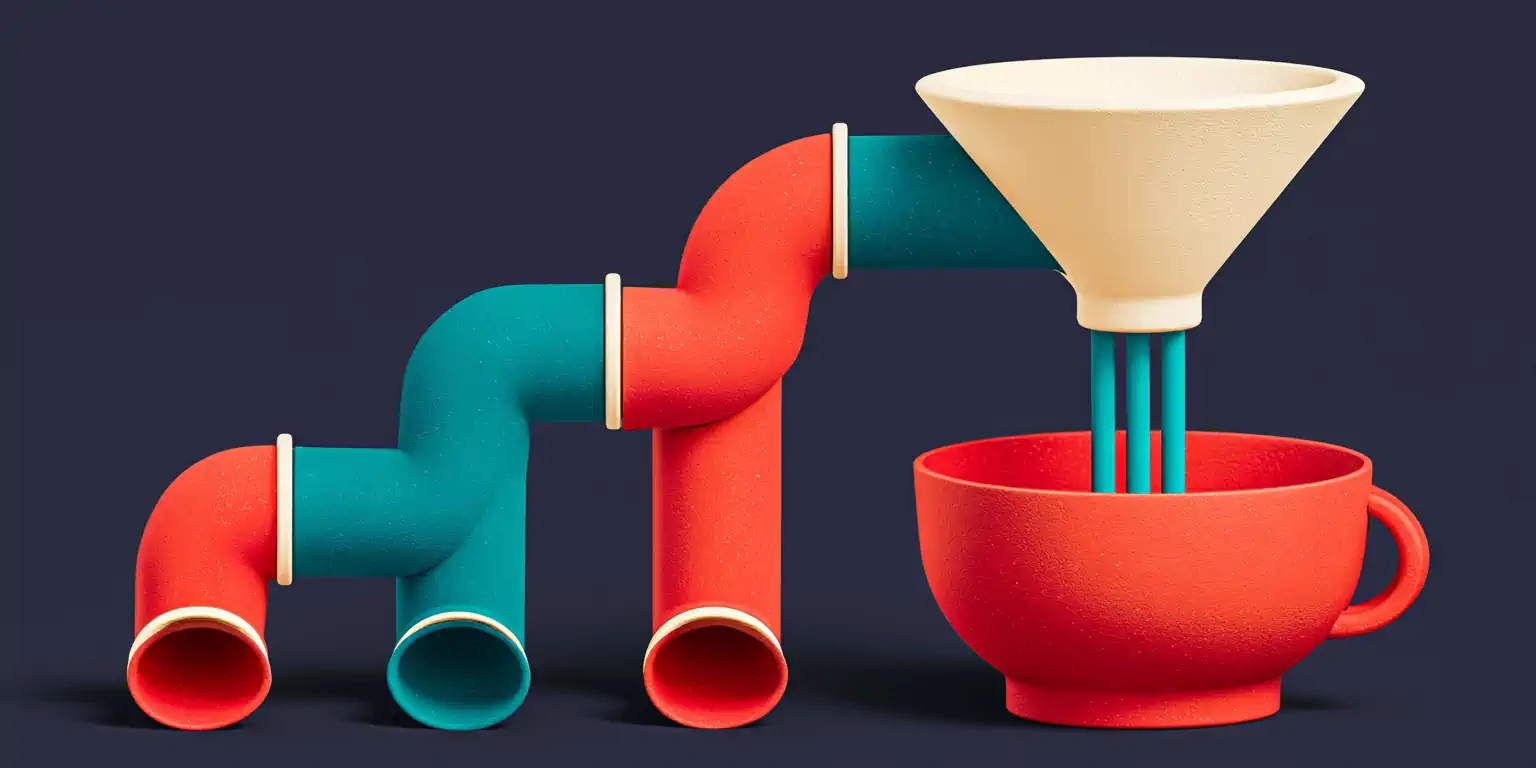
Omnichannel vs Multichannel: What It Really Means for a Small Business
TL;DR
Multichannel means being in many places (WhatsApp, Instagram, phone, email), each on its own. Omnichannel means they're all the same conversation: one customer, one thread, all the context in one place. That difference decides whether your customer repeats their story three times or none. For a small business, real omnichannel includes the phone: one inbox, the AI answers first, and a human steps in with one click and full context.
The difference between omnichannel and multichannel fits in one sentence: multichannel is being in many places; omnichannel is when all those places are the same conversation. It sounds like consultant hair-splitting, but it's what decides whether the person who called you yesterday and messages you on WhatsApp today has to repeat their story from scratch or not. And for a small business, that translates into sales that come in or cool off. Let's explain omnichannel vs multichannel without the jargon, with examples, and make it clear why, for a small business, real omnichannel — the kind that actually works — includes the phone.
Omnichannel vs multichannel: the difference in one sentence (and why confusing them costs money)
Multichannel means your business is present on several channels: you reply on WhatsApp, answer on Instagram, pick up the phone, check email. Good for you — you're where the customer is. The problem is that each channel lives in its own world. The person handling WhatsApp doesn't know that same customer called yesterday; whoever picks up the phone can't see the email they sent last week. That, in one sentence, is the difference between multichannel (many loose inboxes) and omnichannel (a single conversation).
Omnichannel means all those channels are the same conversation. The same customer, the same thread, the whole history in front of you, no matter where they come in. They called on Monday, messaged on Instagram on Tuesday, and closed on Thursday over WhatsApp: to you, it's a single record that tells the whole story.
3 times
how many times a customer repeats their story in a poorly stitched-together multichannel business: once per channel
Why does confusing them cost money? Because the customer doesn't think in channels — they think of one conversation with you. When you make them repeat themselves, you signal that your business isn't coordinated, and that cools things off. On the inside, your team works blind: it duplicates answers, loses follow-ups, and makes mistakes that look silly but cost customers.

What multichannel is: many channels, conversations that don't talk to each other
Multichannel is where almost every small business is today. And it makes sense: each channel got added as the need came up. First the phone, then WhatsApp, then Instagram because that's where the customers are, and good old email. Each with its own tab, its own app, its own owner.
The problem isn't having many channels. The problem is that those channels don't talk to each other. It's like having four employees serving the same customer but forbidden from telling each other anything. Each one does their part well, and even so, the customer walks away feeling that nobody in your business knows who they are.
This shows up especially as volume grows. With five messages a day you keep it all in your head. With two hundred — and a med spa or a busy real estate office gets that — your head can't keep up, and leads start slipping through the cracks. We dig into it in why automating a single channel leaves you halfway there: plugging one crack well while the others stay open doesn't fix the underlying problem.
What omnichannel is: one customer, one thread, all the context in one place
Now flip it around. In a true omnichannel system, you open a customer's record and see the full conversation, ordered by time, regardless of channel: Monday's call, Tuesday's WhatsApp, Thursday's email, all in the same thread. Whoever handles it — person or AI — never starts from scratch.
The practical shift is huge. Your team replies faster because it doesn't have to rebuild the context. It doesn't duplicate answers because it sees what's already been said. And no follow-up gets lost because the conversation isn't fragmented across four inboxes that nobody reviews in full. If you want to see how this plays out day to day, we cover it in managing WhatsApp, Instagram, Messenger, and calls in one place.
| What happens when… | Multichannel | Omnichannel |
|---|---|---|
| The customer calls, then messages on WhatsApp | Starts from scratch, repeats their story | Same thread continues, you already know who they are |
| Your team picks up a conversation midway | Can't see what happened on other channels | Sees the whole history instantly |
| A follow-up is needed | Depends on someone remembering | Logged on the lead's record |
| A call comes in after hours | It's missed or goes to voicemail | The AI answers and drops it in the same thread |
| The case needs a person | You forward screenshots and explain the context | One-click handoff, with everything in front of you |
Read it without getting defensive: in this omnichannel vs multichannel comparison, it's not that multichannel is "wrong" — it's that every row forces you to pitch in — memory, screenshots, luck — to cover what the system doesn't connect on its own. Omnichannel connects it by design.
Why, for a small business, real omnichannel includes the phone
Here's the trap in a lot of tools that sell themselves as "omnichannel": they connect the text channels — WhatsApp, Instagram, Messenger, email, webchat — and leave the phone out. And the phone, for a small business, is still where customers arrive with the most intent: whoever calls wants something now, they're not just browsing.
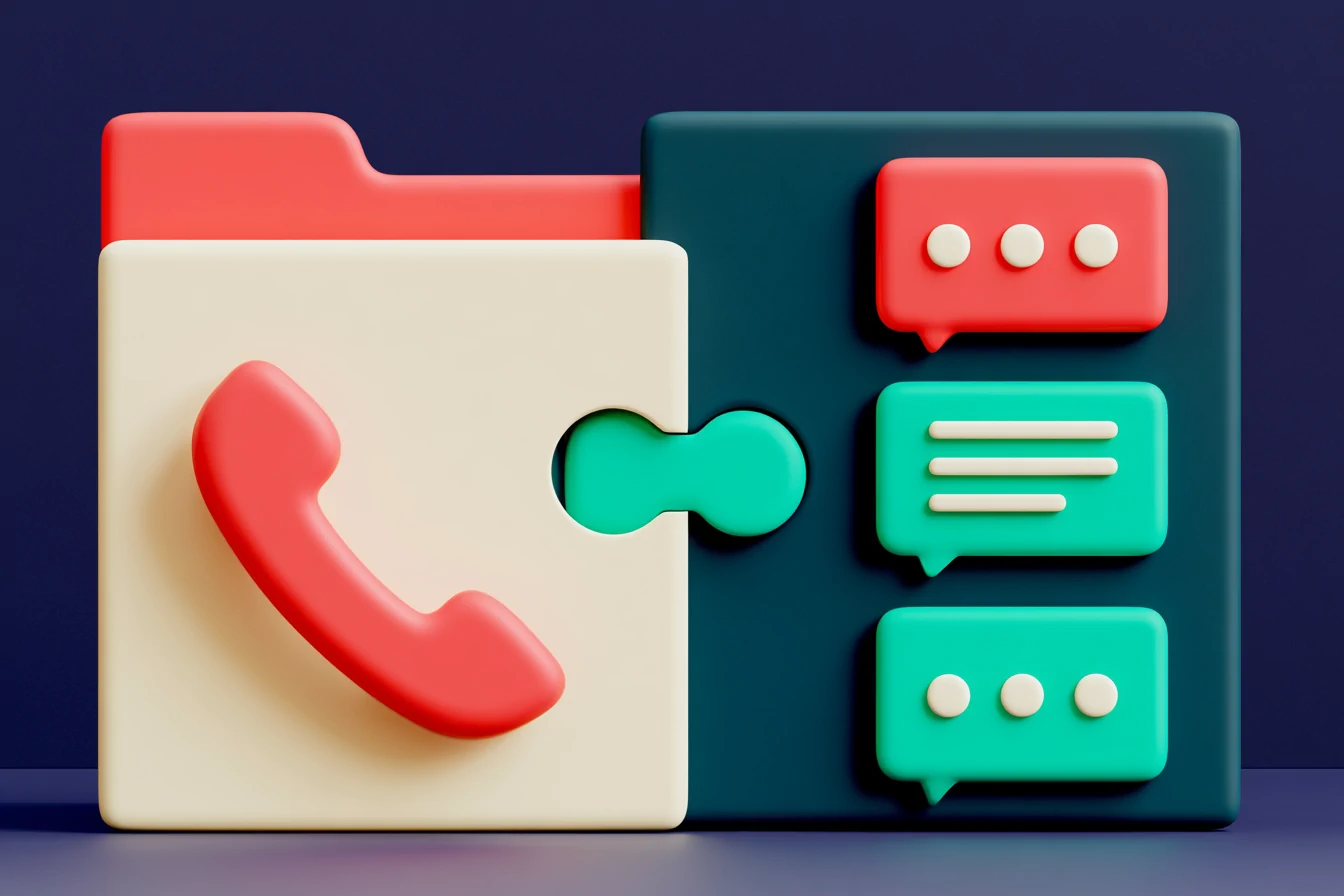
If the call doesn't land in the same thread as the WhatsApp and email, you don't have omnichannel: you have multichannel with a good marketing department. The acid test is simple. When someone calls you, does that call show up in the same record as their WhatsApp? If the answer is no, you're missing the most important leg.
The 'omnichannel' myth
If it connects WhatsApp, Instagram, and email, it's already omnichannel.
What you need to check
If it leaves the phone out, it's text-only multichannel. The call is the highest-intent channel and it has to be in the same thread.
The 'omnichannel' myth
The phone and chats are separate worlds by nature.
What you need to check
No: a call can be transcribed, qualified, and logged on the same record as everything else, with its summary and sentiment.
The 'omnichannel' myth
As long as my team jots calls down in a spreadsheet, it's all connected.
What you need to check
That's manual work that collapses the first hectic day. Real omnichannel means it connects on its own, without anyone copying anything.
That's why, when we talk about bringing it all together, the phone isn't an extra: it's the center. A well-handled call that gets logged as a lead, with its summary and next action, is worth more than ten loose chats. Which is why we insist on going from the call to the lead, inside the CRM, instead of leaving it floating as a stray data point nobody looks at again.
What omnichannel done right looks like: one inbox, AI first, human in one click
Okay, the theory is clear. What does it look like in practice, in a real small business, without an IT team behind it? Like this:
The contact comes in, from anywhere
The AI answers first, no waiting
It all comes together in one thread
The human steps in with one click, warm
The follow-up moves on its own
That's what TotemAI does: an AI + human platform that picks up the phone in ~1 second and replies across every messaging channel right away, brings it all together in a single thread, and lets a person step in when needed. Underneath there's a Kanban-style lead board where the AI moves each contact based on the outcome of the conversation, with human cadences — a "no" means stop, not push harder — so follow-up doesn't go cold or turn into a nuisance. If that part interests you, we cover it in following up with your leads so none go cold.
60%
shorter response time, according to our clients
+55%
more leads treated as a priority, according to our clients
24/7
coverage without hiring more people, nights and holidays too
Those figures are outcome signals from Totem clients, not guarantees: your case depends on your volume and your industry. But the logic is solid: when everything is one conversation, you reply sooner and lose less. And if you're wondering where to start bringing it together, the usual move is to sort out the most chaotic channel first — almost always WhatsApp — as we explain in the guide to automating WhatsApp Business support, and add the rest to the same thread from there.
The verdict
Multichannel is being in many places. Omnichannel is when all those places are the same conversation. The difference isn't semantic: it's the difference between a customer who repeats their story three times and cools off, and one you recognize on the first try no matter where they message you from. For a small business, the omnichannel worth having includes the phone, lives in one inbox, and lets the AI answer first and a human step in with one click. The rest is marketing.
What matters
- Multichannel is being on many channels; omnichannel is when they're all a single conversation.
- Confusing them costs money: the customer repeats their story, your team works blind, and follow-ups fall through.
- In real omnichannel, one customer = one thread = all the context in one place.
- The acid test: if the call doesn't land in the same thread as the WhatsApp, it's multichannel in disguise.
- Omnichannel done right: one inbox, the AI picks up the phone in ~1 s and replies to messages right away, and the human steps in with one click and the context.
- A flat monthly plan with minutes and messages included: you know what you pay each month, with no lock-in.
Official sources
Frequently asked questions
What's the difference between omnichannel and multichannel?
Multichannel is being present on several channels (WhatsApp, Instagram, phone, email) that run separately: each has its own inbox and they don't share information. Omnichannel is when all those channels are the same conversation: a single customer, a single thread, and all the context in one place, no matter where they write or call from.
Why does the difference matter to a small business?
Because it decides whether your customer repeats their story three times or none. In multichannel, someone who called you yesterday and texts you today on WhatsApp starts from scratch, and that cools off sales and creates mistakes. In omnichannel, your team (and the AI) sees the whole history, replies faster and with context, and no follow-up falls through the cracks.
Does real omnichannel include the phone?
Yes, and it's the acid test. A lot of tools call it "omnichannel" when they only connect the text channels and leave the phone out. But the phone is still where customers arrive with the most intent. If a call doesn't land in the same thread as the WhatsApp and email, it isn't omnichannel: it's multichannel with good marketing.
Which is better for a small business, omnichannel or multichannel?
For a small business, omnichannel is what really moves the needle: you reply sooner, you don't duplicate answers, and no follow-up falls through. Multichannel isn't "wrong" — it's where almost everyone is today — but it forces you to lean on memory, screenshots, and luck to cover what the system doesn't connect on its own. Once your volume gets past a handful of messages a day, omnichannel pays off.
Do I need an IT team to set up omnichannel support in my small business?
No. "Omnichannel" used to sound like a big-company project, but today a small business can have a single inbox that connects phone, WhatsApp, Instagram, Messenger, text, email, and webchat without coding anything. The usual move is to start with the most chaotic channel (almost always WhatsApp) and add the rest to the same thread.
How does Totem disclose that it's an AI, and can you talk to a person?
When the AI answers, it discloses that you're talking to an automated system: under the EU AI Act, an AI that interacts with people must say so (Regulation (EU) 2024/1689, art. 50.1) — a rule that applies if you take calls from or handle data of EU residents, and a best practice the FTC and many state laws expect of you anyway. On top of that, the customer can always ask to speak with a person; the handoff is warm and one-click, with full context, so nobody repeats anything. Totem's data is hosted in the EU (GDPR doesn't require data to stay in the EU, but it does require safeguards for transfers outside the EEA) — a product choice, not a legal requirement.
Related reading
WhatsApp vs SMS for Business: Which to Use in Your Small Business and When Each Channel Wins
WhatsApp vs SMS for business: open rates, cost per message, and when to use each channel in your SMB—plus how to run both from one inbox.

Monthly or Annual Plan in TotemAI: 2 Months Free, No Lock-In
Monthly vs annual plan: annual gives you 2 months free (pay 10, use 12) and neither locks you in. Pick the billing cycle that fits your cash flow.

All-in-One Platform vs Separate Tools: Voice AI, WhatsApp, Booking, and CRM
All-in-one platform vs separate tools: four apps glued with Zapier lose 1 in 7 leads. Compare real cost, seams, and upkeep for your SMB.
AI or a Call Center? You Don't Have to Choose: The Hybrid Model
AI or a call center? You don't have to choose. AI handles the volume 24/7 and a person takes the sensitive calls with context. Here's the hybrid model.
 Book a demo
 by
by  Totem Studio